Is BAMS a Safe Career Choice In This Age of Modern Sciences?
Home / BAMS / Is BAMS a Safe Career Choice In This Age of Modern Sciences?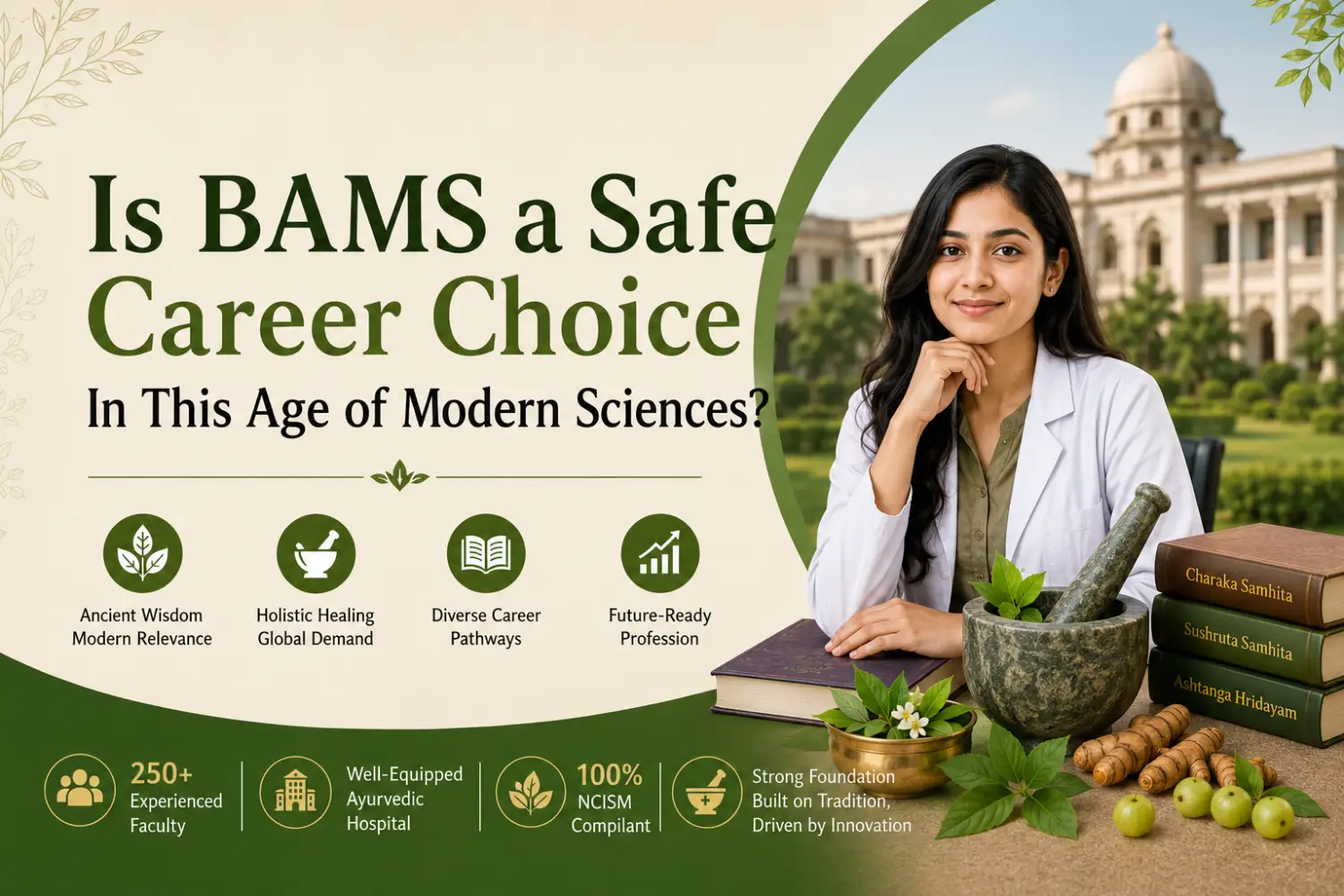
INTRODUCTION
Current healthcare trends indicate a seismic shift in patient preference. The Ayush sector in India is growing at an impressive rate, with the market projected to reach significantly higher valuations by 2030. This is not merely a revival of tradition; it is a response to the limitations of symptomatic treatment.
With over 4 lakh registered practitioners, the Bachelor of Ayurvedic Medicine and Surgery (BAMS) has evolved from a cultural inheritance into a rigorous, evidence-based scientific discipline. For students evaluating their future, this path offers not just stability, but a chance to lead the integration of Ashtanga Ayurveda (eight branches of Ayurveda) with modern diagnostics.
What Is BAMS Full Form?
BAMS full form is Bachelor of Ayurvedic Medicine and Surgery. It is a professional medical degree focused on the preventive and curative aspects of patient care. The BAMS full form and course duration reflect a commitment to depth, spanning 5.5 years, which includes 4.5 years of academic instruction followed by a mandatory one-year internship.
The curriculum is governed by strict NCISM (National Commission for Indian System of Medicine) guidelines, ensuring that every graduate is competent in both classical theory and modern pathology. The course is not static; it builds a scholar-physician capable of diagnosing root causes rather than just suppressing symptoms.
How Does the BAMS Syllabus and Subjects Build Competence?
The BAMS syllabus and subjects are structured like the growth of a tree, moving from fundamental roots to specialised branches. This is far removed from rote memorisation; it is an analytical study of life itself.
- Professional Year 1: Students ground themselves in Padartha Vigyan (fundamental principles) and Sanskrit. Here, they master Tridosha (the three bio-energies: Vata, Pitta, and Kapha), which govern all physiological processes.
- Professional Year 2: The focus shifts to Dravyaguna (pharmacology). Students study herbal interactions and formulations, understanding how Rasa (taste) and Vipaka (post-digestive effect) influence the body.
- Professional Year 3: Clinical exposure deepens with Nidana (diagnostics). Students learn to correlate Prakriti (body constitution) assessment with disease pathology.
- Professional Year 4: Advanced training in Kayachikitsa (internal medicine) and Shalya Tantra (surgery), preparing students for their clinical training and mandatory one-year internship.
The top BAMS colleges in Ghaziabad have upgraded their teaching hospitals to provide students with hands-on exposure to these classical texts, known as Samhita Siddhant.
How Does NEET UG Shape BAMS Admission 2026?
Admission to this prestigious course is rigorously merit-based. NEET UG for BAMS admission 2026 remains the sole gateway for aspiring Ayurvedic doctors. The cut-off scores vary annually, but the principle remains: only those with a strong foundation in modern biology and chemistry can navigate the Ayurvedic curriculum.
Following the exam, the Central and State AYUSH counselling process allocates seats. Students often aim for government institutions, but many high-quality Ayurvedic colleges in UP also offer private seats with excellent infrastructure. It is crucial to verify that your chosen institution is recognised by the NCISM to ensure your registration with the State Council of Indian Medicine is valid post-graduation.
How Does BAMS Compare to MBBS?
Students often struggle to distinguish the operational differences between these two medical streams. The difference between BAMS and MBBS lies in their philosophical approach to the human body.
| Feature | BAMS (Ayurveda) | MBBS (Allopathy) |
|---|---|---|
| Core Philosophy | Focuses on Tridosha balance and root-cause eradication. | Focuses on symptomatic relief and intervention. |
| Treatment Modality | Herbal formulations, Panchakarma, and lifestyle management. | Pharmaceuticals and surgical intervention. |
| Patient Approach | Holistic; treats the patient, not just the disease. | Disease-centric; targets specific pathogens or organs. |
| Preventive Focus | High emphasis on Dinacharya (daily regimen) and Ritucharya (seasonal regimen). | Focuses primarily on vaccines and screening. |
| Intervention | Non-invasive to minimally invasive (e.g., Kshara Sutra). | Highly invasive surgeries and advanced life support. |
Both systems now see an integrative healthcare and modern medicine overlap, where Ayurvedic practitioners and allopathic doctors collaborate on chronic disease management.
What Career Pathways Exist After BAMS?
The career scope after BAMS in India and abroad has expanded beyond private clinics. Graduates today are entering diverse sectors that demand deep medical knowledge.
- Government Service: The role of an Ayurvedic Medical Officer (AMO) is highly coveted. Recruitment through state Public Service Commissions offers job security and a platform to serve rural populations.
- Clinical Research: There is immense scope in clinical research in Ayurveda and R&D opportunities. Institutions like the ICMR and private firms are investing in validating Ayurvedic formulations.
- Specialised Practice: Many alumni from top BAMS colleges in Ghaziabad have established thriving Panchakarma centres. These centres attract patients globally, fueling the global demand for Ayurvedic wellness tourism.
Additionally, graduates can pursue higher studies like MD/MS (Ayurveda) to specialise in fields like surgery or paediatrics.
What Are Salary Expectations for BAMS Graduates?
Financial stability is a valid concern for any student. The salary of a BAMS doctor in the private vs government sectors varies based on expertise and location.
- Government Sector: An AMO can expect a starting salary between ₹50,000 and ₹80,000 per month, along with government benefits.
- Private Sector: Fresh graduates typically start between ₹25,000 and ₹40,000. However, specialists in Ayurvedic colleges in UP and private hospitals often see their packages rise to ₹12-15 Lakhs per annum after acquiring postgraduate degrees.
- Entrepreneurship: Owners of successful wellness centres or branded clinics often exceed these figures significantly.
Does BAMS Align with Modern Sciences?
Absolutely. The modern Ayurvedic physician does not rely on guesswork. Evidence-based Ayurvedic practice is the new standard. Whether it is using modern diagnostic tools to confirm a diagnosis before prescribing Ayurvedic pharmacology (Dravyaguna) or collaborating with the WHO Global Centre for Traditional Medicine, the field is modernising rapidly.
Graduates from top BAMS colleges in Ghaziabad are often found leading Ayurvedic nutritionist and wellness coach roles in metropolitan cities, bridging the gap between ancient wisdom and urban lifestyle diseases. Similarly, Ayurvedic colleges in UP are increasingly incorporating Panchakarma centre management and entrepreneurship modules into their electives to prepare students for the business of health.
Frequently Asked Questions
Yes, compared to private MBBS seats, BAMS course fees in India (Government vs Private) are moderate. Government colleges charge nominal fees, while private institutions vary based on infrastructure.
Yes, the career scope after BAMS in India and abroad is growing. Countries in Europe and the Middle East are opening up to Ayurvedic lifestyle consultants and wellness experts.
This role involves designing diet plans based on a patient's Prakriti. It is a high-demand niche in urban centres.
Yes, NEET UG for BAMS admission 2026 is mandatory for admission into any recognised college in India.
Related Blogs
Ranking the Best Private BAMS Colleges: What Students Should Know
With the current era of holistic healing and alternative medicine, Ayurveda is taking center stage…
Agni, the Digestive Fire: Why Ayurvedic Courses in India Call It the Root of Health
Agni is the digestive and metabolic fire that Ayurveda places at the very centre of…
Ayurveda in the Age of Biohacking
You know what’s funny? We live in a world where our watches know more about…
Why Is Ayurveda Becoming Popular in Modern Healthcare? A Student’s Guide to Choosing an Ayurveda College in Noida
Ayurveda is becoming popular in modern healthcare because people now want care that prevents illness,…
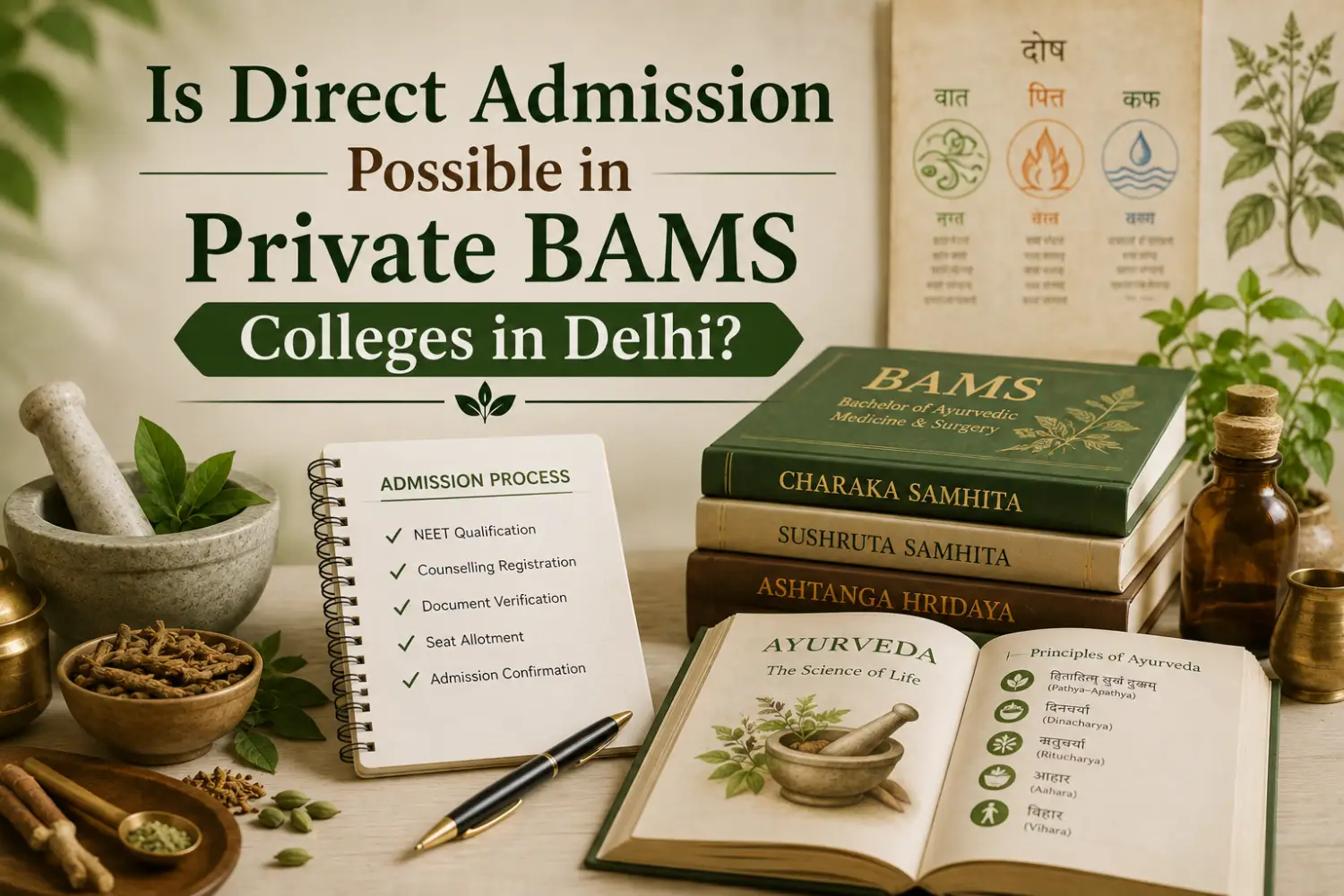
Is Direct Admission Possible in Private BAMS Colleges in Delhi?
No. Direct admission is not possible, and there are two separate reasons for that. There…
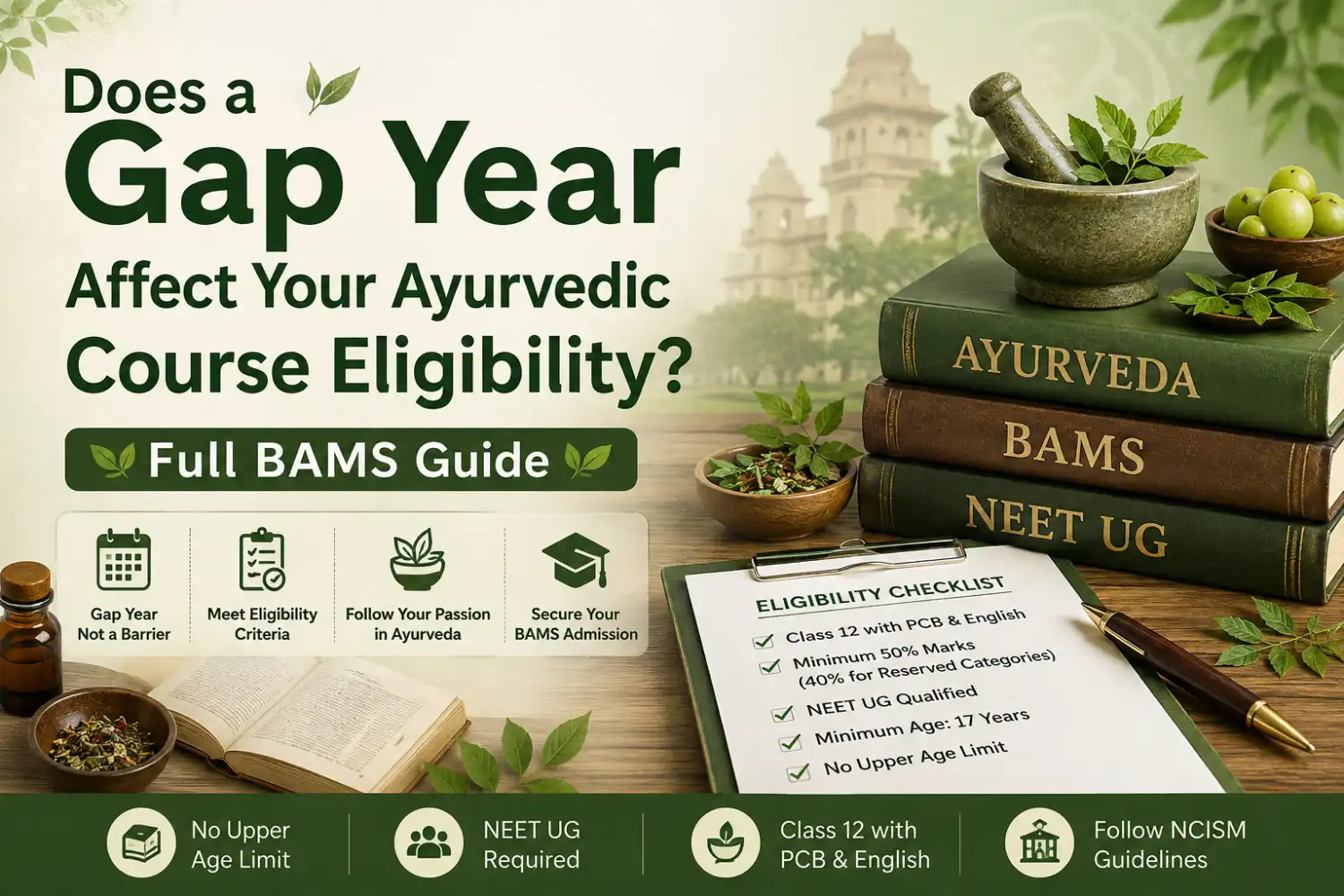
Does a Gap Year Affect Your Ayurvedic Course Eligibility? Full BAMS Guide
A gap year does not lower ayurvedic course eligibility for BAMS admission in India. NCISM…