
Difference Between Ayurveda and Modern Allopathic Medicine: A Guide for Students of Private Ayurvedic Colleges in UP
Home / BAMS / Difference Between Ayurveda and Modern Allopathic Medicine: A Guide for Students of Private Ayurvedic Colleges in UP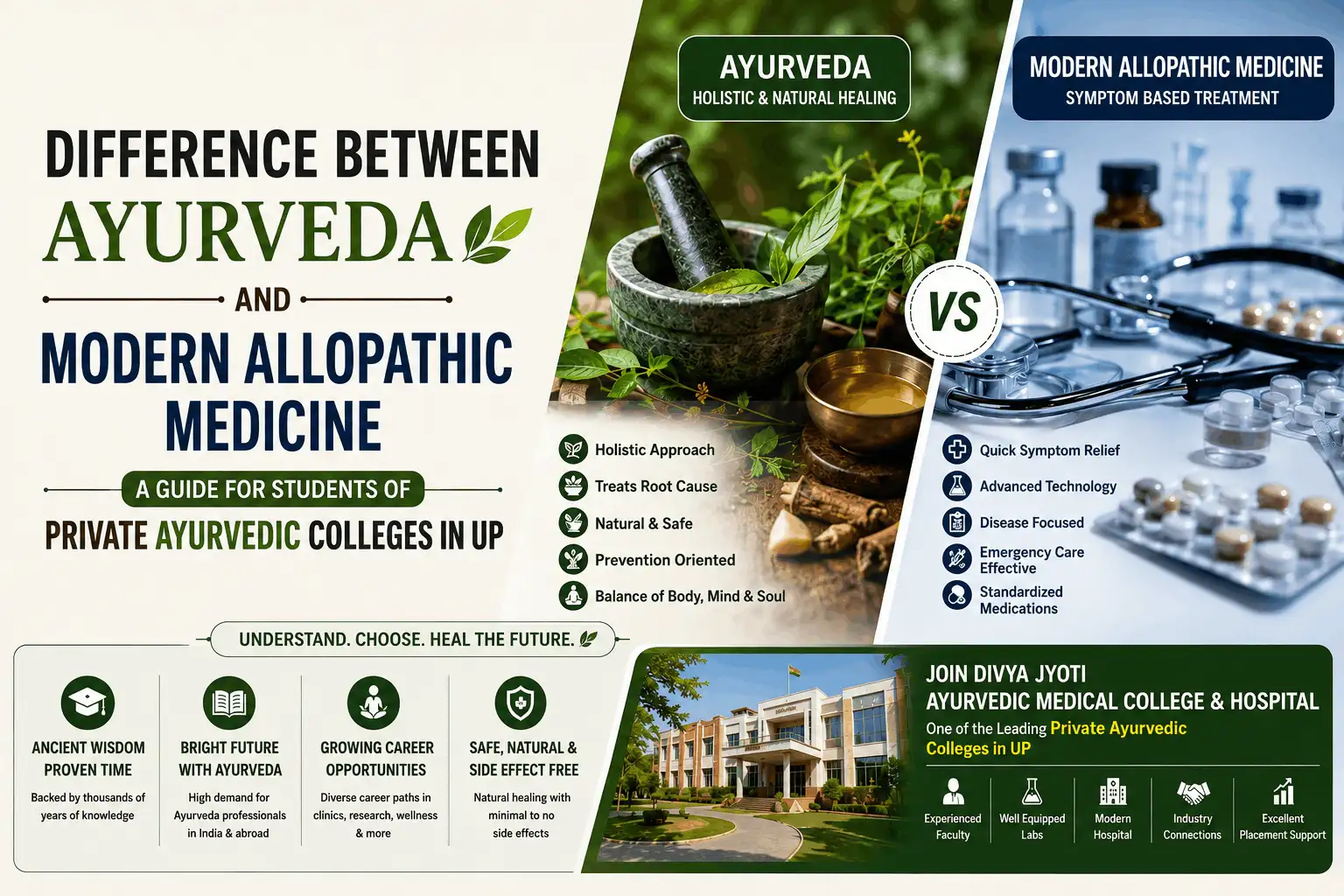
Ayurveda and modern allopathic medicine are two complete systems of healing that understand the human body in very different ways. Ayurveda, the classical Indian science of life, treats the whole person and works to keep the three doshas in balance. Allopathy, the dominant form of modern medicine, identifies and treats disease through evidence-based drugs, surgery and standardised protocols.
This guide explains how the two systems differ in philosophy, diagnosis and treatment, why they increasingly work together, and how private Ayurvedic colleges in UP prepare students to practise both.
Key facts at a glance
- Ayurveda is a holistic Indian system of medicine that treats the individual, focusing on the balance of the three doshas, while allopathy targets disease through evidence-based drugs and surgery.
- The two systems differ in philosophy, diagnosis and treatment, yet both are recognised by the Government of India and are increasingly practised together as integrative medicine.
- A BAMS degree (Bachelor of Ayurvedic Medicine and Surgery) is the formal qualification to become a registered Ayurvedic doctor in India, and it teaches both classical Ayurveda and modern medical sciences.
- BAMS is a five and a half year programme, including a one-year internship, with NEET as the entrance examination.
- Private Ayurvedic colleges in UP, such as DJ Ayurveda College in Modinagar, combine classical training with a teaching hospital so that students learn theory and clinical practice together.
What is the basic difference between Ayurveda and allopathic medicine?
The basic difference is one of intent. Ayurveda seeks to restore and preserve the natural balance of the body so that disease does not take hold, whereas modern allopathic medicine focuses on identifying a disease and removing or suppressing its cause. One asks why the body lost its equilibrium. The other asks what specific agent or malfunction is producing the symptom.
Ayurveda, whose name combines the Sanskrit words ayus (life) and veda (knowledge), is a system of medicine documented more than two thousand years ago in classical texts such as the Charaka Samhita and the Sushruta Samhita. It treats health as a state of harmony between the body, the mind and the environment.
Allopathy, often called modern medicine or biomedicine, developed through the scientific method, laboratory research and clinical trials. It explains the body through anatomy, physiology, biochemistry and measurable data, and it tests every treatment against controlled evidence before that treatment is accepted into practice.
Both systems are valid in their own context. Understanding where each one is strongest is far more useful than treating them as opponents.
What are the core principles of Ayurveda?
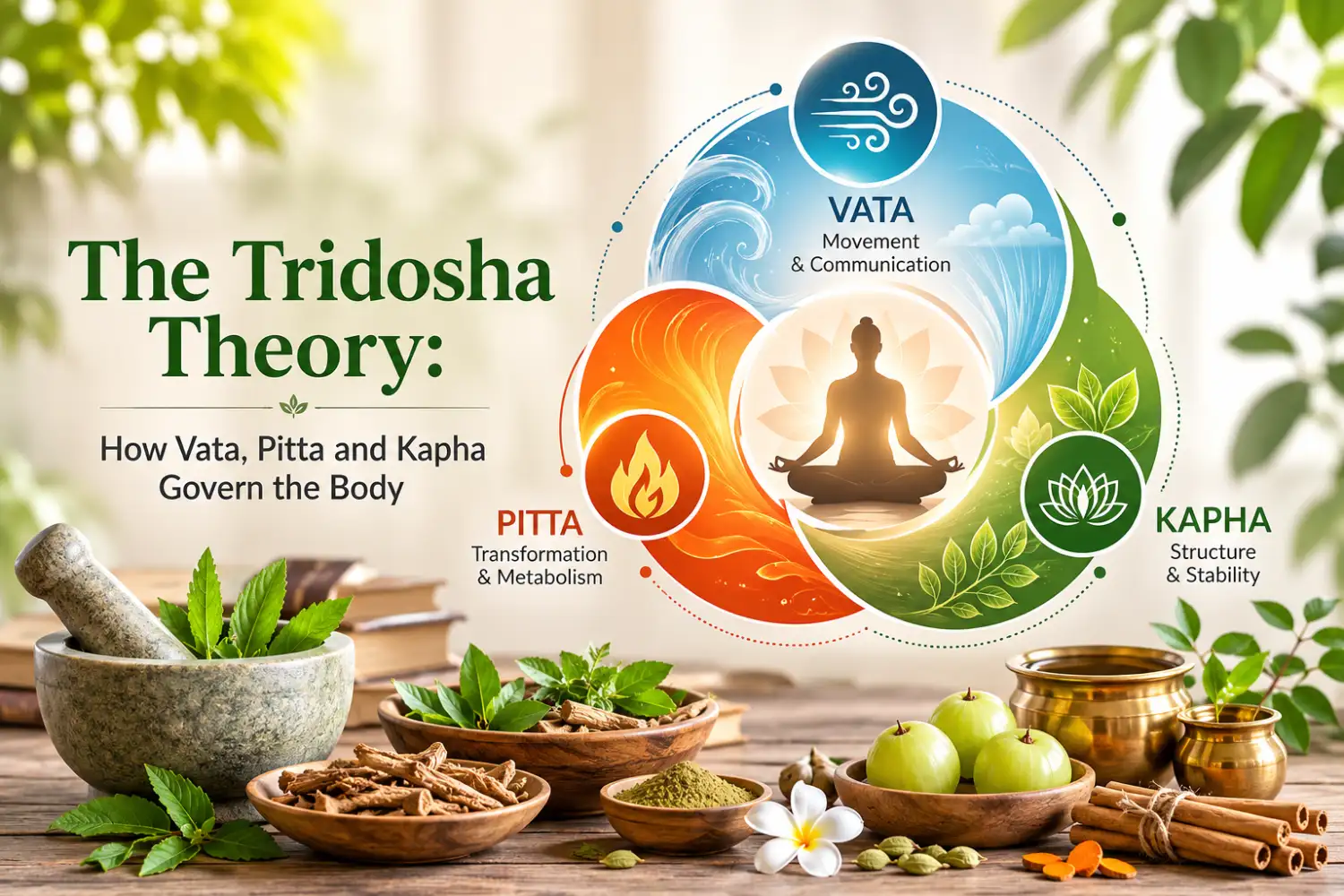
Ayurveda rests on the idea that everything in nature, including the human body, is made of five great elements (Pancha Mahabhuta): space, air, fire, water and earth. These combine into three functional energies called doshas, which govern how the body works.
The three doshas are Vata (the energy of movement), Pitta (the energy of digestion and transformation) and Kapha (the energy of structure and lubrication). Every person is born with a unique proportion of these three, known as their prakriti or individual constitution. Health, in Ayurvedic terms, is the steady maintenance of that natural balance, while illness is its disturbance.
Two further concepts are central. Agni is the digestive and metabolic fire that converts food and experience into usable nourishment. Ama is the residue of incomplete digestion, a kind of metabolic toxin that classical texts hold responsible for many disorders when it accumulates. A strong agni and the absence of ama are signs of good health.
| Dosha | Elements | What it governs | When in balance | When aggravated |
|---|---|---|---|---|
| Vata | Space and air | Movement, breathing, circulation, nerve impulses, elimination | Energy, alertness, regular function | Dryness, anxiety, irregular digestion, joint discomfort |
| Pitta | Fire and water | Digestion, metabolism, body temperature, vision | Sharp intellect, steady appetite, healthy warmth | Acidity, inflammation, irritability, skin complaints |
| Kapha | Earth and water | Structure, immunity, lubrication, stability | Strength, calmness, stamina, sound sleep | Heaviness, lethargy, congestion, weight gain |
Treatment in Ayurveda works through diet, daily routine (dinacharya), seasonal routine (ritucharya), herbal and herbo-mineral formulations, yoga, and the cleansing therapies grouped under Panchakarma. The aim is to remove the cause of imbalance rather than only to silence the symptom.
A short note is important here. The descriptions above are educational. Any Ayurvedic treatment should be taken only under a qualified, registered Ayurvedic practitioner, and this content is not a substitute for professional medical advice.
What are the core principles of modern allopathic medicine?
Modern allopathic medicine is built on observation, measurement and evidence. It studies the body as a set of interconnected organ systems and explains disease through pathogens, genetics, biochemical imbalance or structural damage. A diagnosis is confirmed wherever possible by laboratory tests, imaging or other investigations rather than by inference alone.
The defining feature of allopathy is its evidence base. A drug or procedure is generally accepted only after it has been tested in controlled clinical trials and reviewed across large patient populations. This process gives modern medicine its great strength in acute and life-threatening situations, where a precise and rapid intervention can be decisive.
The principal tools of allopathy are pharmaceutical drugs, surgery, emergency care and intensive care. In an infection, a trauma, a heart attack or a surgical emergency, these tools save lives in ways that no slower approach can match. The trade-off is that some treatments manage symptoms over the long term rather than addressing an underlying lifestyle cause, which is one reason interest in integrative approaches continues to grow.
How do Ayurveda and allopathy differ in diagnosis and treatment?
The clearest way to see the difference is to place the two systems side by side. Ayurveda reads the patient as a whole and individual being. Allopathy reads the disease as a measurable, often universal, process.
Ayurveda Vs Allopathy
| Aspect | Ayurveda | Modern allopathic medicine |
|---|---|---|
| Core aim | Restore balance of the doshas and preserve health (swasthya) | Diagnose and treat disease, often by targeting its cause or pathology |
| View of the body | Body, mind and spirit as one system shaped by individual constitution | Organ systems, cells and biochemistry understood through measurable data |
| Cause of illness | Dosha imbalance, weak digestive fire (agni), accumulation of toxins (ama) | Pathogens, genetic factors, organ dysfunction, structural or chemical abnormality |
| Diagnosis | Pulse reading (nadi pariksha), observation, questioning, the eightfold examination (ashtavidha pariksha) | History, physical examination, blood tests, imaging, biopsy and other investigations |
| Treatment | Diet, lifestyle, herbal formulations, Panchakarma, yoga | Pharmaceutical drugs, surgery, radiotherapy, emergency and intensive care |
| Approach | Largely individualised and constitution based | Largely standardised and protocol based, refined through trials |
| Speed of relief | Often gradual, directed at the root cause | Often rapid, especially in acute conditions |
| Strongest in | Chronic, lifestyle and functional disorders, prevention and wellness | Trauma, infection, surgery and medical emergencies |
Neither column makes the other redundant. A person with a sudden appendicitis needs surgery, not a herbal decoction. A person managing a long-standing digestive or stress-related complaint may benefit from the lifestyle and constitutional approach that Ayurveda is built around. The mature view, taught in any serious Ayurvedic college, is to know the limits of each system.
How do the two systems approach prevention and lifestyle?
Prevention sits at the very centre of Ayurveda, not at its edge. Classical texts devote entire sections to dinacharya, the daily routine of sleep, diet, exercise and hygiene, and to ritucharya, the adjustment of that routine across the seasons. The purpose of Swasthavritta, the Ayurvedic discipline of preventive health, is to keep a healthy person healthy rather than to wait for disease.
Modern medicine also values prevention, but it expresses it differently. Vaccination, public health screening, early detection programmes and the management of risk factors such as blood pressure and blood sugar are the tools of preventive allopathy. These are population-level measures supported by large datasets.
The two approaches are complementary. Ayurvedic lifestyle guidance and modern preventive screening together give a fuller picture of a person’s health than either alone. This is precisely the kind of combined thinking that the growing field of integrative medicine encourages.
Are Ayurveda and allopathy rivals, or can they work together?
They are best understood as partners rather than rivals. India is one of the few countries where traditional and modern systems of medicine are formally recognised side by side. The Ministry of AYUSH oversees Ayurveda, Yoga, Unani, Siddha and Homoeopathy, while the regulation of Ayurvedic education sits with the National Commission for Indian System of Medicine (NCISM).
Integrative medicine, the considered combination of the two systems, is now a recognised area of clinical interest. The World Health Organization has repeatedly encouraged the responsible integration of traditional medicine into national health systems. Hospitals and research centres in India increasingly study how Ayurvedic and allopathic care can be used together, particularly for chronic and lifestyle conditions.
Preliminary studies suggest benefits in several areas, and the body of modern research on classical Ayurvedic interventions continues to grow. As with any therapeutic claim, such findings should be read carefully, and Ayurvedic treatment should always be undertaken with a registered practitioner.
How do private Ayurvedic colleges in UP teach the difference between the two systems?
A good BAMS programme does not teach Ayurveda in isolation. It teaches classical science alongside the modern medical sciences, so that graduates understand both languages of medicine. This is one of the most important things a student gains at private BAMS colleges in Uttar Pradesh: the ability to think in Ayurvedic terms while remaining fluent in modern anatomy, physiology, pathology and pharmacology.
The structure of the BAMS course makes this dual training visible. Foundational years build the classical and the modern basis together, and the clinical years apply both in a teaching hospital with OPD and IPD facilities.
| Stage | Focus | Representative subjects |
|---|---|---|
| First year | Foundations | Ayurveda fundamentals (Padartha Vigyan), Sanskrit, Rachana Sharir (anatomy), Kriya Sharir (physiology) |
| Second year | Materia medica and diagnosis | Dravyaguna (medicinal plants), Rasashastra and Bhaishajya Kalpana (pharmaceutics), Rognidan (pathology) |
| Third year | Clinical foundations | Swasthavritta (preventive medicine and yoga), Agadtantra (toxicology), Prasuti Tantra and Streeroga, Kaumarbhritya |
| Final year | Clinical practice | Kayachikitsa (internal medicine), Panchakarma, Shalya Tantra (surgery), Shalakya Tantra (ENT and ophthalmology) |
| Internship | Supervised practice | One-year rotation across OPD, IPD, Panchakarma and surgical assistance |
The exact syllabus follows the NCISM curriculum. The point for a prospective student is simple. Choosing among private Ayurvedic colleges in UP means looking for genuine recognition, an attached teaching hospital, full departments and faculty who can teach both traditions with equal seriousness.
For a quick reference, the basic route into the programme looks like this.
| Requirement | Detail |
|---|---|
| Qualification | Class 12 with Physics, Chemistry and Biology |
| Minimum marks | Generally 50 per cent, subject to category and institution |
| Entrance exam | NEET, mandatory across India |
| Course duration | 5.5 years, including a one-year internship |
| Mode | Full-time |
What career and scope follow a BAMS degree?
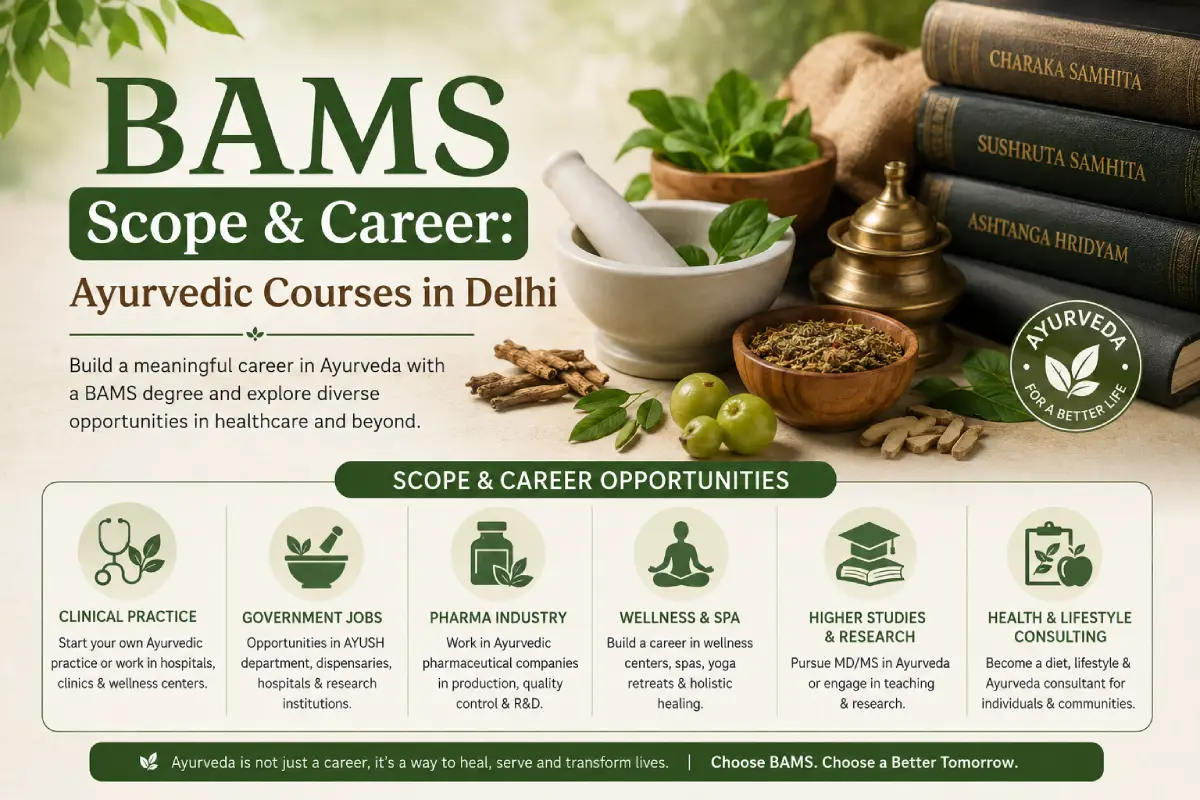
A BAMS graduate becomes a registered Ayurvedic doctor, eligible to practise, and the scope is broader than many aspirants expect. Career paths include private clinical practice, work in Ayurvedic and integrative hospitals, postgraduate study leading to an MD or MS in an Ayurvedic specialty, research, teaching, roles in the Ayurvedic pharmaceutical industry, and positions within the AYUSH framework. The college’s own programme page lists a typical starting range for freshers, with higher figures for experienced professionals.
The DJ Ayurveda College perspective
At Divya Jyoti Ayurvedic Medical College and Hospital in Modinagar, Ghaziabad, the difference between Ayurveda and allopathy is not an abstract debate. It is something students live every day in the classroom and on the wards. The college runs the full BAMS programme, recognised by NCISM and affiliated to Mahayogi Gorakhnath University, Gorakhpur, across fourteen departments that span the fundamentals, the clinical sciences and therapeutics.
Teaching is grounded in a hospital of more than one hundred beds, with OPD and IPD facilities, so that students see real patients alongside classical study. Being a leading Ayurvedic college in Uttar Pradesh, its emphasis throughout is on producing graduates who respect Ayurveda deeply while remaining literate in modern medicine. That balance is exactly what the comparison in this article describes.
Conclusion
Understanding the difference between Ayurveda and modern allopathic medicine is the foundation of a thoughtful career in healthcare. One system restores balance and prevents illness over the long term. The other diagnoses and treats disease with speed and precision. A well-trained Ayurvedic doctor values both. If this way of thinking about health interests you, the BAMS programme offers a structured path into it, and you are welcome to explore the curriculum and the teaching hospital at DJ Ayurveda College.
Disclaimer: This article is intended for educational purposes only. It does not provide individual medical advice and is not a substitute for consultation with a qualified, registered medical or Ayurvedic practitioner. Any treatment, herbal or otherwise, should be undertaken only under professional supervision.
Frequently Asked Questions
Ayurveda treats the whole person and works to restore the natural balance of the doshas, addressing the root cause of illness. Allopathy diagnoses and treats a specific disease through evidence-based drugs, surgery and standardised protocols. One preserves equilibrium, the other targets the disease process directly.
Ayurveda is a structured, observation-based system documented in classical texts and refined over centuries. A growing body of modern research now studies its interventions using scientific methods. Classical theory and modern evidence should be kept distinct, and research in the field continues to expand steadily.
They can, and this combined use is called integrative medicine. It should always be supervised by qualified practitioners, because certain herbs and drugs can interact. Many Indian hospitals and research centres now study how the two systems can safely complement each other, especially in chronic conditions.
Neither is universally better, because each is strongest in different situations. Allopathy excels in trauma, infection, surgery and emergencies. Ayurveda is valued for chronic, lifestyle and preventive care. The wisest approach is to use the right system for the right problem rather than choosing one for everything.
The recognised qualification is the BAMS degree, the Bachelor of Ayurvedic Medicine and Surgery. It is a professional medical degree that allows registration as an Ayurvedic practitioner in India. The course teaches both classical Ayurveda and modern medical sciences, including anatomy, physiology and pathology.
BAMS is a five and a half year programme, comprising four and a half years of study and a one-year internship. Eligibility requires Class 12 with Physics, Chemistry and Biology, generally a minimum of fifty per cent, and a qualifying score in NEET, which is mandatory across India.
Yes. A recognised BAMS programme at private Ayurvedic colleges in UP teaches modern anatomy, physiology, pathology and pharmacology alongside classical Ayurveda. This dual training ensures graduates understand both systems, can recognise when modern intervention is needed, and can practise responsibly within an integrative healthcare environment.
Ayurvedic treatment is generally considered safe when prescribed by a qualified, registered practitioner using authentic formulations. Self-medication, unverified products and unsupervised use carry real risks. This article is educational only and is not a substitute for professional advice, and any treatment should be taken under expert supervision.
A BAMS graduate can practise as an Ayurvedic doctor, pursue postgraduate study, work in hospitals and wellness organisations, enter research or teaching, join the Ayurvedic pharmaceutical industry, or take up roles within the AYUSH framework. Rising global interest in traditional medicine continues to widen the available career options.
Look for valid NCISM recognition and university affiliation, an attached teaching hospital with OPD and IPD facilities, full departments across the fundamentals and clinical sciences, experienced faculty, and good clinical exposure. These factors matter far more than marketing claims when comparing private BAMS colleges in Uttar Pradesh.
Related Blogs
How NEP 2020 Is Transforming Ayurvedic Education in India
Education in India has been changing faster than we can keep track of. But for…
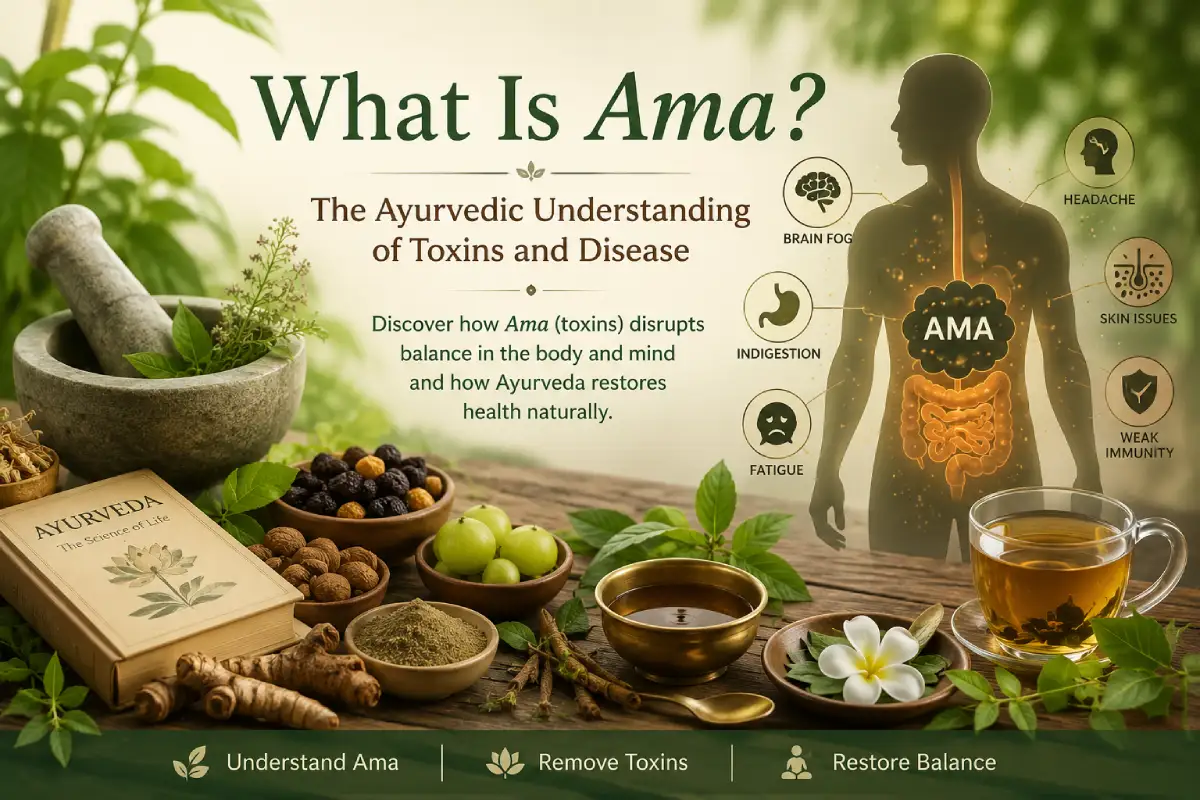
What Is Ama? The Ayurvedic Understanding of Toxins and Disease
Quick Update Ama is the heavy, sticky residue formed when agni, the digestive fire, is…
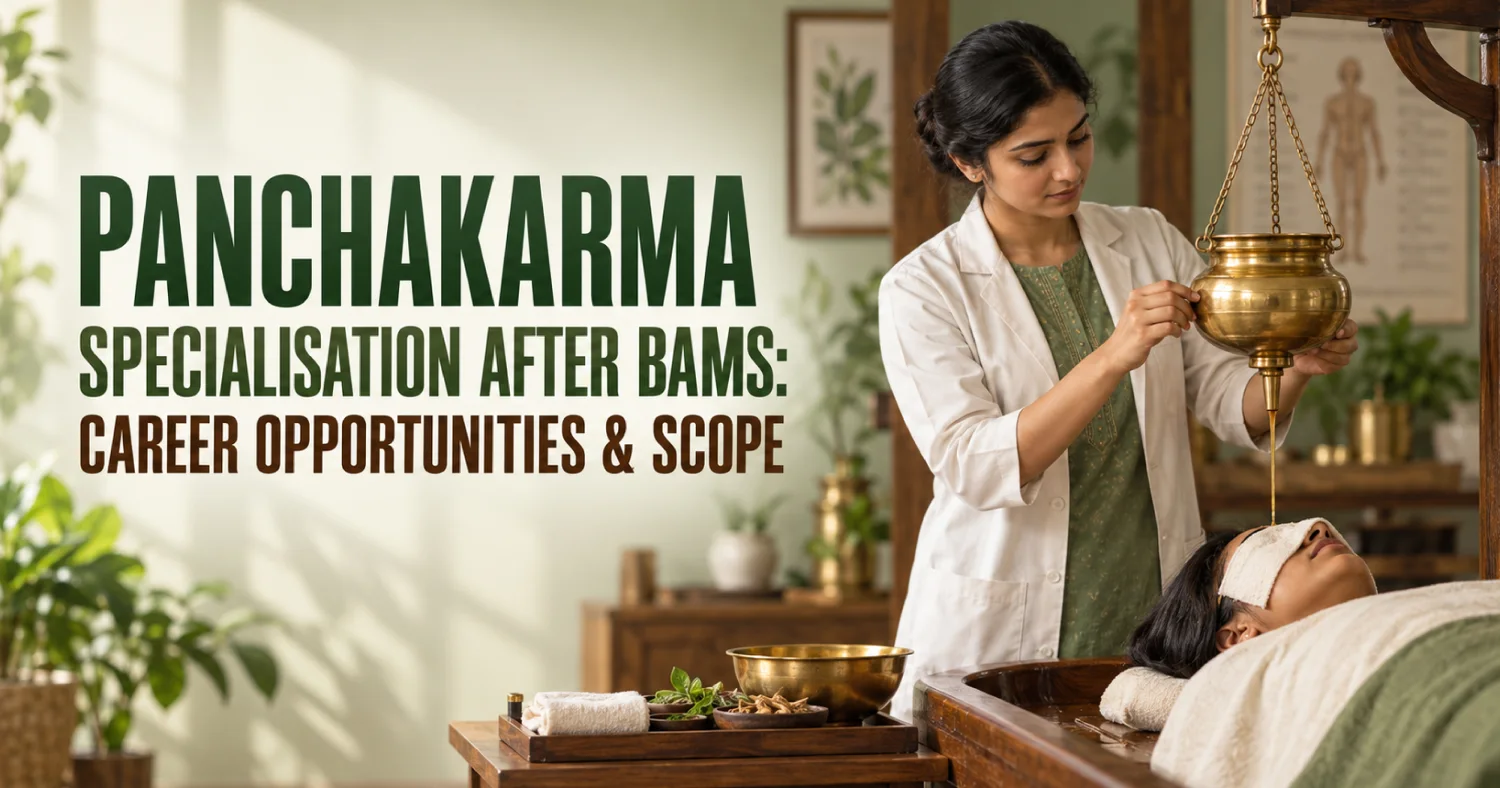
Panchakarma Specialisation After BAMS: Career Opportunities and Scope for Students
A student walks into the Panchakarma block for the first time in third year. Warm…
The Tridosha Theory: How Vata, Pitta and Kapha Govern the Body
The Tridosha theory is the foundation of Ayurvedic physiology. It holds that three functional energies,…
Why Ayurveda Courses Are Attracting Students from All Medical Backgrounds
In the rapidly changing world of healthcare today, there is one compelling trend that cannot…
Scope and Career After a BAMS Degree in India: What the Top Ayurvedic Courses in Delhi Lead To
A BAMS degree, the Bachelor of Ayurvedic Medicine and Surgery, qualifies a graduate to practise…