How WHO’s Push for Traditional Medicine is Influencing Ayurveda Courses in India
Home / BAMS / How WHO’s Push for Traditional Medicine is Influencing Ayurveda Courses in India
If you have ever thought about studying Ayurveda, you might have noticed that the conversation around it has changed. It is no longer spoken about only in cultural or historical terms. Today, it is part of a global healthcare discussion. The World Health Organisation (WHO) is placing a visible focus on traditional medicine, and that is directly shaping how Ayurveda courses in India are designed and delivered.
Why is WHO taking an interest in Ayurveda now?
In 2022, the WHO set up the Global Centre for Traditional Medicine in Gujarat, India. This is not a symbolic gesture — it is the first-ever WHO centre dedicated to traditional medicine anywhere in the world. It aims to support all 194 member states in building stronger traditional health systems. According to the WHO, over 170 countries report using traditional medicine in some form (source).
For you as a student, this means your chosen field is not seen as something on the sidelines. It is part of a recognised, global healthcare framework.
What changes is this bringing to Ayurveda education?
Curricula are evolving. An ayurvedic doctor course today often includes training in modern diagnostic tools, research methodology, and digital record-keeping. This is partly in response to the WHO’s call for quality assurance, safety, and evidence-based practice in traditional medicine.
If you think about it, that shift benefits students in two ways. First, it builds credibility when explaining your qualifications to someone outside India. Second, it prepares you to work in roles that go beyond running a clinic — research, wellness tourism, public health, and even product development are now viable paths.
Are there numbers to back up this growth?
Yes. Official government figures show that the number of Ayurveda colleges in India rose from 263 in 2014–15 to 541 in 2023–24. Undergraduate seats in Ayurveda and related AYUSH courses doubled from 32,256 to 64,812 in the same period. Postgraduate seats saw a jump from 1,891 to 7,799 (source).
This expansion did not happen by accident. It reflects both domestic policy changes and the influence of the WHO in positioning traditional medicine as a serious, structured healthcare option.
Why does WHO involvement matter for your career?
Let us break it down. If you start one of the current Ayurveda courses, you benefit from:
- Global recognition — your degree is more easily understood by international employers and institutions.
- Research access — more chances to work on clinical trials or collaborate with overseas partners.
- Policy inclusion — greater involvement of Ayurveda in public health projects creates more employment opportunities.
These three factors mean that the ayurvedic doctor course you join today could lead to a career that is both local and global.
How does this connect to market demand?
The wellness industry is growing fast. Reports from the Global Wellness Institute suggest it could reach USD 8.5 trillion by 2027 (source). Traditional medicine plays a strong role in that growth. Countries like Australia, the UAE, and several European nations are actively promoting integrative healthcare models. That means someone with a modernised, WHO-aligned Ayurveda qualification is in a stronger position to work internationally.
What should you check before choosing a course?
If you are serious about making the most of this momentum, ask these questions before enrolling:
- Does the course include training in international health standards and quality control?
- Are there research projects linked to the WHO or other recognised bodies?
- Will you have internships in both traditional and integrated healthcare environments?
- Does the college actively update its syllabus to match global trends?
The answers will tell you whether the course is aligned with the future, not just the past.
A final note for future students
Ayurveda has always been rooted in tradition, but now it is also moving into spaces that require global thinking and scientific validation. The WHO’s involvement ensures that Ayurveda courses in India, and the Ayurvedic doctor course in particular, are preparing graduates for a world where traditional and modern medicine work side by side.
If your ambition is to serve patients, contribute to research, or take Ayurveda to an international platform, you are stepping into the field at a turning point. What you learn over the next few years will be shaped not only by centuries of wisdom but also by a rapidly growing, globally recognised healthcare movement.
Related Blogs
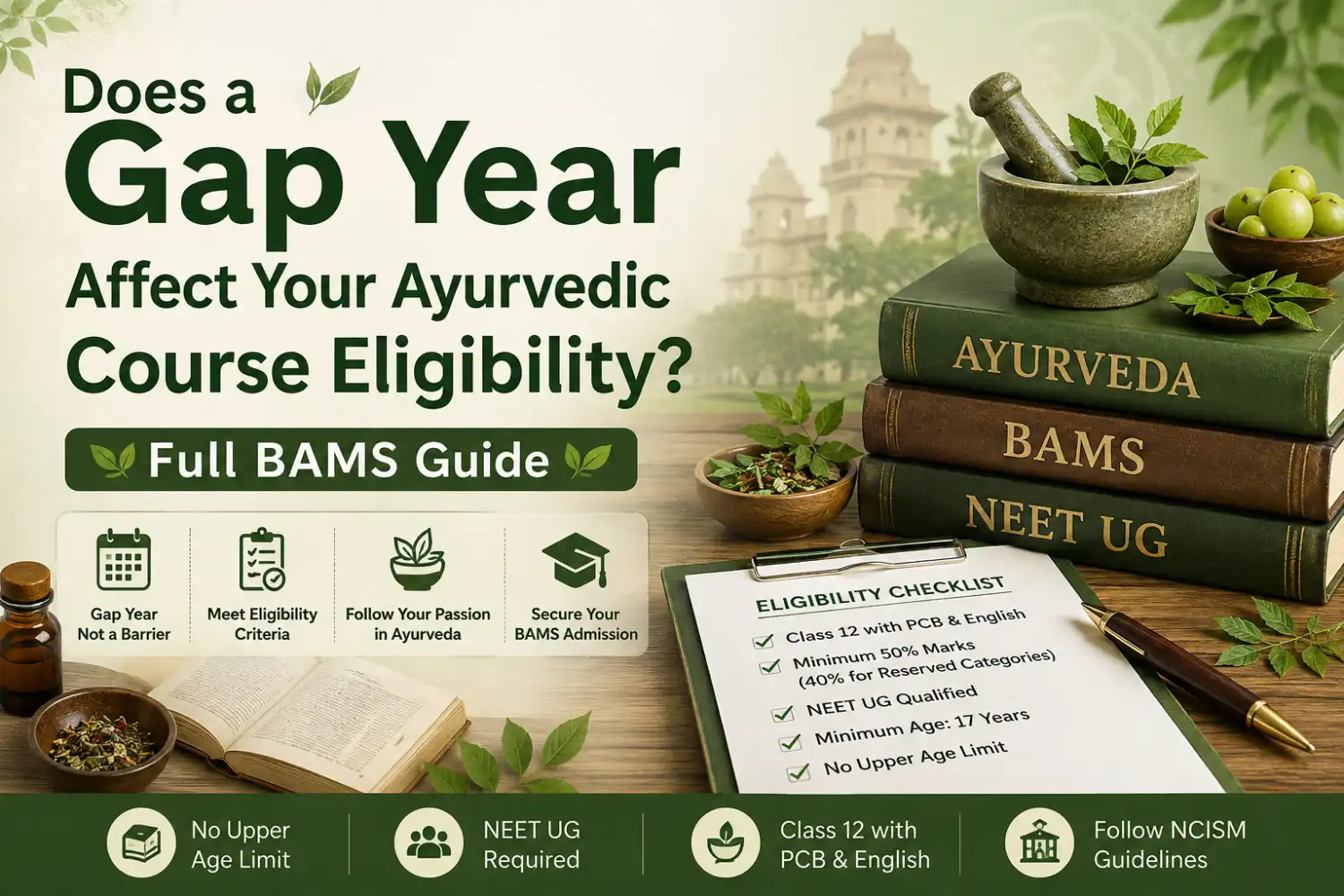
Does a Gap Year Affect Your Ayurvedic Course Eligibility? Full BAMS Guide
A gap year does not lower ayurvedic course eligibility for BAMS admission in India. NCISM…

Best BAMS Colleges in UP: BAMS Admission 2027 Eligibility, NEET Requirements, Counselling and Fees
The best BAMS colleges in UP take admission only through NEET UG scores, followed by…
Why a BAMS Course Could Be the Most Rewarding Career Move in 2025
In an era of blazing speed change, today’s students are looking for careers that are…
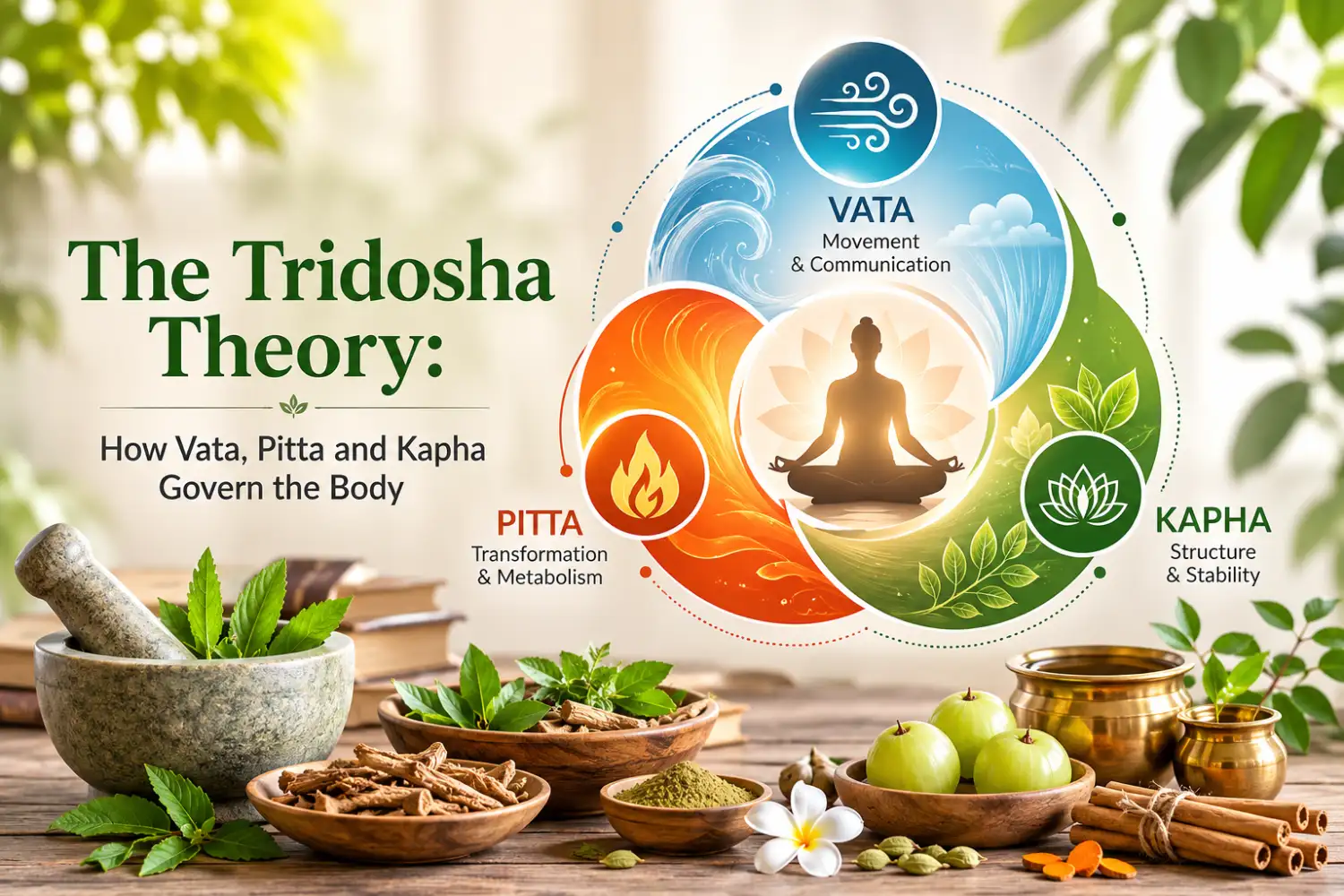
The Tridosha Theory: How Vata, Pitta and Kapha Govern the Body
The Tridosha theory is the foundation of Ayurvedic physiology. It holds that three functional energies,…
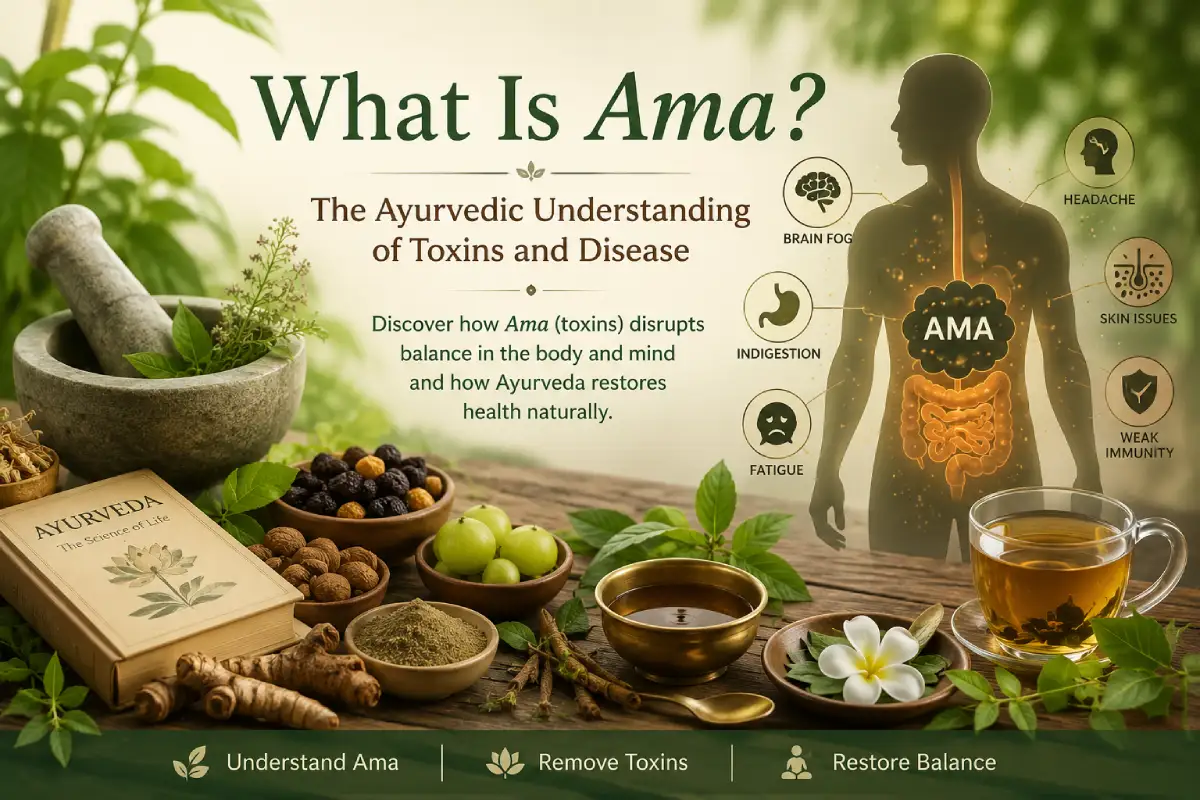
What Is Ama? The Ayurvedic Understanding of Toxins and Disease
Quick Update Ama is the heavy, sticky residue formed when agni, the digestive fire, is…
Which Ayurvedic medicine courses are driving genuine career growth today?
When a student considers Ayurvedic medicine courses, they are really choosing a future of healing,…