
How NEP 2020 Is Transforming Ayurvedic Education in India
Home / BAMS / How NEP 2020 Is Transforming Ayurvedic Education in India
Education in India has been changing faster than we can keep track of. But for Ayurveda, this change feels different, almost emotional. For decades, Ayurvedic studies stayed rooted in tradition, sometimes too still, almost afraid to evolve. Then came NEP 2020, quietly asking, “Can we honour our roots and still grow new wings?” And that one question has started reshaping the entire journey of Ayurvedic learning.
Many students today are drawn to healing. They want to study medicine but also understand people, not just symptoms. That’s where the new Ayurvedic medicine courses begin to feel relevant again.
Why NEP 2020 Feels Like a Turning Point For Ayurvedic Medicine Courses
Spare a moment to think about how you learn now: practical exposure, online modules, internships, workshops, and real patients. A few years ago, Ayurvedic education rarely looked like this. But NEP 2020 changed the tone. It said, “Learn across disciplines, connect ancient and modern, make it real.”
At DJ Ayurveda College, we started seeing this shift early. Students now explore topics that connect Rasayana therapy, herbal pharmacology, nutrition science, psychology, and community health. You learn why ghee improves memory, how sleep patterns affect digestion, and what mindfulness does to stress levels. It’s no longer about repeating what’s written; it’s about testing it, feeling it, and applying it.
When you study under this new system, the walls between ancient and modern start to fade. You might spend your morning studying Charaka Samhita and your afternoon analysing patient data. That balance defines the future of Ayurveda courses in India.
What Does It Mean for Students Choosing Ayurvedic Medicine Courses?
A lot of students we speak to say they love Ayurveda but fear it won’t give them a strong career. Let us say this, that fear is understandable but outdated. With NEP 2020, Ayurveda is no longer isolated from mainstream healthcare.
Now, universities are offering credit-based Ayurvedic Medicine Courses, research-driven electives, and internships that allow collaboration with other medical systems. For example, you might work alongside physiotherapists or nutritionists, learning how dosha balance connects with muscle recovery or diet. It’s a completely new mindset.
Across India, more than 450 Ayurveda colleges are adopting this multidisciplinary structure. The Ministry of AYUSH has also invested heavily in innovation and research. There’s funding for projects that test classical remedies under modern lab conditions. The point is simple: Ayurveda is not a museum subject anymore. It’s a growing science with both logic and life.
And the most interesting part? You don’t just study for a degree. You train to be relevant in hospitals, wellness centres, startups, research labs, and even global wellness tourism.
How DJ Ayurveda College Puts NEP 2020 Into Action
Policies mean little unless they reach classrooms. DJ Ayurveda College has made sure they do. The new structure blends traditional wisdom with hands-on learning.
Students here start their journey in the herbal garden, understanding plants not from books but from soil. They move to clinical practice where pulse reading, Nadi Pariksha, and Panchakarma therapy become part of daily study. Then come discussions on data, reports, and patient response, connecting Ayurveda to evidence.
There are workshops on mental wellness, yoga, Ayurvedic cosmetology, and even digital health platforms. This blend of ancient and new gives students confidence to talk science anywhere, from an Indian clinic to an international conference.
When you walk through the DJ Ayurveda College campus, you see students debating formulations, preparing herbal decoctions, and comparing them with pharmacological results. It’s learning with purpose, the kind of learning NEP 2020 had in mind.
Why This Change Matters Personally
Let’s pause here subtly, because this is not just policy talk. It’s about your future.
If you’ve ever felt torn between tradition and technology, Ayurveda might be the bridge you were searching for. It respects where we come from, yet it doesn’t hold us back. The NEP 2020 gives it that modern rhythm: choice-based learning, interdisciplinary projects, and even online collaboration with researchers abroad.
DJ Ayurveda College has always believed education should shape thinkers, not followers. You’ll see that in the way classes are taught, the freedom students have to ask questions, and the gentle way teachers guide them towards clarity.
The world is changing. Wellness is no longer a luxury; it’s a necessity. And people everywhere are looking for authentic, natural, evidence-based healing. That’s exactly what Ayurveda stands for.
A Small Message Before You Enrol In Ayurvedic Medicine Courses
If you’re reading this, wondering whether Ayurveda is still relevant, the answer is simple: it always was, we just stopped listening.
Now, with NEP 2020, that silence is broken. The best Ayurvedic medicine courses teach the same ancient truths but through methods today’s generation understands. The curriculum has evolved, but the essence remains: balance, awareness, compassion.
So take a step forward. Visit the DJ Ayurveda College. Talk to students. Watch how theory turns into touch, how knowledge becomes healing.
Ayurveda isn’t about going back in time. It’s about carrying timeless wisdom forward. And maybe your journey as a healer begins here, in this new India that finally lets both tradition and transformation walk hand in hand.
Related Blogs

Is BAMS a Safe Career Choice In This Age of Modern Sciences?
INTRODUCTION Current healthcare trends indicate a seismic shift in patient preference. The Ayush sector in…

Career Opportunities After BAMS: A Simple Guide for Students Looking at an Ayurvedic Medical College in Meerut
The BAMS course (Bachelor of Ayurvedic Medicine and Surgery) is a 5.5-year degree with a…
The Three Doshas Explained for Beginners: A Foundation at the Top BAMS Colleges in India
The three doshas, Vata, Pitta and Kapha, are the three functional energies that Ayurveda uses…
Can You Put ‘Dr’ After Studying at an Ayurveda Institute in Delhi?
Yes, but only if the course is a full BAMS degree. A graduate of an…
Ayurvedic Doctor Course: Major Specialisations, Courses and Career Scope
An ayurvedic doctor course in India means the BAMS degree. It runs for 5.5 years,…
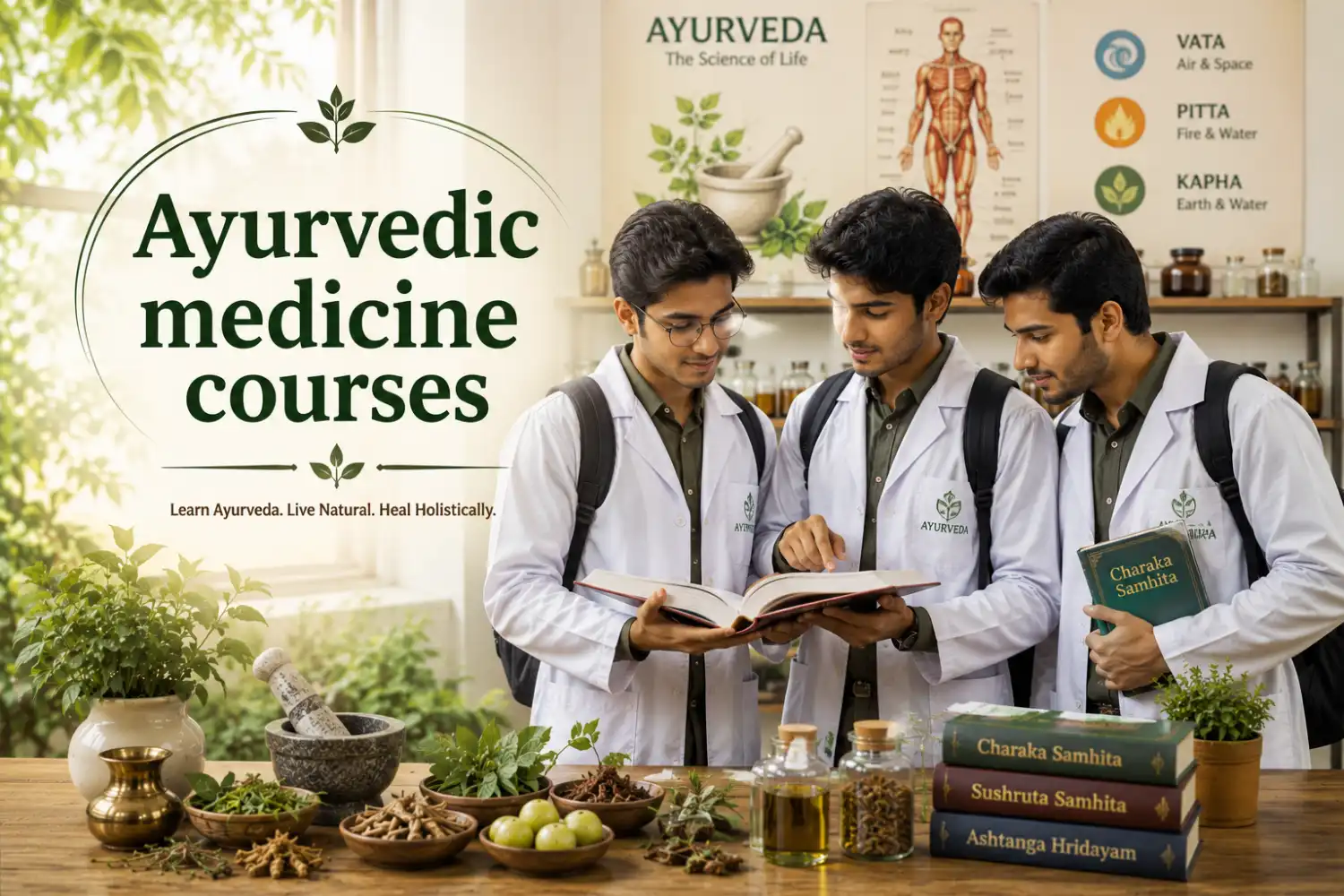
Which Ayurvedic medicine courses are driving genuine career growth today?
When a student considers Ayurvedic medicine courses, they are really choosing a future of healing,…