
New Government Initiatives Boosting Careers in Ayurveda and BAMS
Home / BAMS / New Government Initiatives Boosting Careers in Ayurveda and BAMS
Over the last few years, the landscape of Ayurveda education has been transformed by active policy decisions. For students wondering whether this is the right time to commit to the duration of BAMS course, the changes are promising. Expanded seats, modernised curricula, and better research funding have given this field more visibility than ever before. These developments are not just about numbers; they represent opportunities for graduates to move into both clinical and non-clinical roles with confidence.
What is driving this shift?
According to the Ministry of Ayush, the number of Ayurveda colleges in India has more than doubled in less than a decade. In 2014–15, there were 263 such colleges. By 2023–24, the number reached 541. Undergraduate seats in Ayurveda and related AYUSH disciplines have grown from 32,256 to 64,812 during the same period. Postgraduate seats rose from 1,891 to 7,799. These figures, published through official parliamentary updates (source), point to a clear commitment to strengthening traditional medicine systems.
How does this affect those studying in BAMS private colleges in Delhi?
Students enrolling in BAMS private colleges in Delhi are already seeing changes. While location brings advantages in terms of access to healthcare hubs and research centres, policy reforms now mean better internship frameworks, integration of digital tools, and participation in public health projects. These initiatives ensure that students in both urban and semi-urban settings can gain exposure to large-scale community health programs during the duration of BAMS course. That experience matters greatly when entering the competitive healthcare sector.
Which policy changes are the most impactful?
Several measures have been introduced:
- Digital health integration: The Ayush Grid platform is being developed to link practitioners, researchers, and students. It is expected to standardise electronic health records for Ayurveda practice.
- Curriculum revision: Updated syllabi now place emphasis on public health, clinical research, and skill-based training, making graduates more versatile.
- Research funding: Dedicated grants for Ayurveda clinical trials have increased, opening roles for graduates interested in evidence-based practice.
- International collaboration: Agreements with multiple countries are enabling recognition of Ayurveda degrees abroad, a benefit for students in BAMS private colleges in Delhi and across India.
These initiatives mean students can connect their education to a wider network of opportunities.
Why is the timing ideal for aspiring Ayurvedic doctors?
The duration of BAMS course is five and a half years, including a one-year internship. With the current expansion in government-backed healthcare projects, students who enrol today are likely to graduate into a stronger, better-funded system. In addition, public health programs are increasingly involving Ayurveda professionals, creating jobs in areas like preventive care, wellness tourism, and chronic disease management.
For example, national surveys indicate that over 80 percent of rural households still use some form of traditional medicine. This ongoing demand ensures that Ayurveda graduates are not working in niche corners but in a growing, mainstream health ecosystem.
What role does location play?
Being in the capital region has strategic advantages. BAMS private colleges in Delhi often participate in central pilot projects, allowing students to experience policy implementation first-hand. Access to seminars, workshops, and research fellowships is easier due to proximity to regulatory bodies. While this is true for Delhi, students in other parts of the country are also benefiting from centrally sponsored infrastructure upgrades.
How do these initiatives prepare students for career diversity?
Government schemes are not limited to traditional clinic roles. Many projects are opening avenues in product development, hospital administration, public health consultancy, and telehealth services. The exposure gained during the duration of BAMS course can prepare students to work in interdisciplinary teams alongside nutritionists, physiotherapists, and even software developers building healthcare applications.
For those considering private practice, enhanced training in entrepreneurship and patient record management is increasingly common in college-level workshops. These skills align with the government’s push for standardised healthcare delivery.
What should prospective students do now?
- Review the latest syllabus updates from the regulatory authority.
- Look at how BAMS private colleges in Delhi or other preferred locations are integrating digital health and public health modules.
- Consider the career timeline: five and a half years of education, plus the emerging market conditions you will step into.
- Track internship partnerships and hospital tie-ups, as they are critical for applying classroom learning in real-life contexts.
Final thoughts
The present wave of government-backed reforms is creating a better environment for Ayurveda professionals than at any point in the last two decades. For students deciding on the duration of BAMS course, these initiatives mean that the time invested now is likely to yield broader and more stable career opportunities. And for those evaluating BAMS private colleges in Delhi, it is worth noting that location, policy engagement, and infrastructure can combine to give you a head start in an evolving sector. This is a moment to step forward with informed confidence, backed by both tradition and the strong framework being built for the future.
Related Blogs
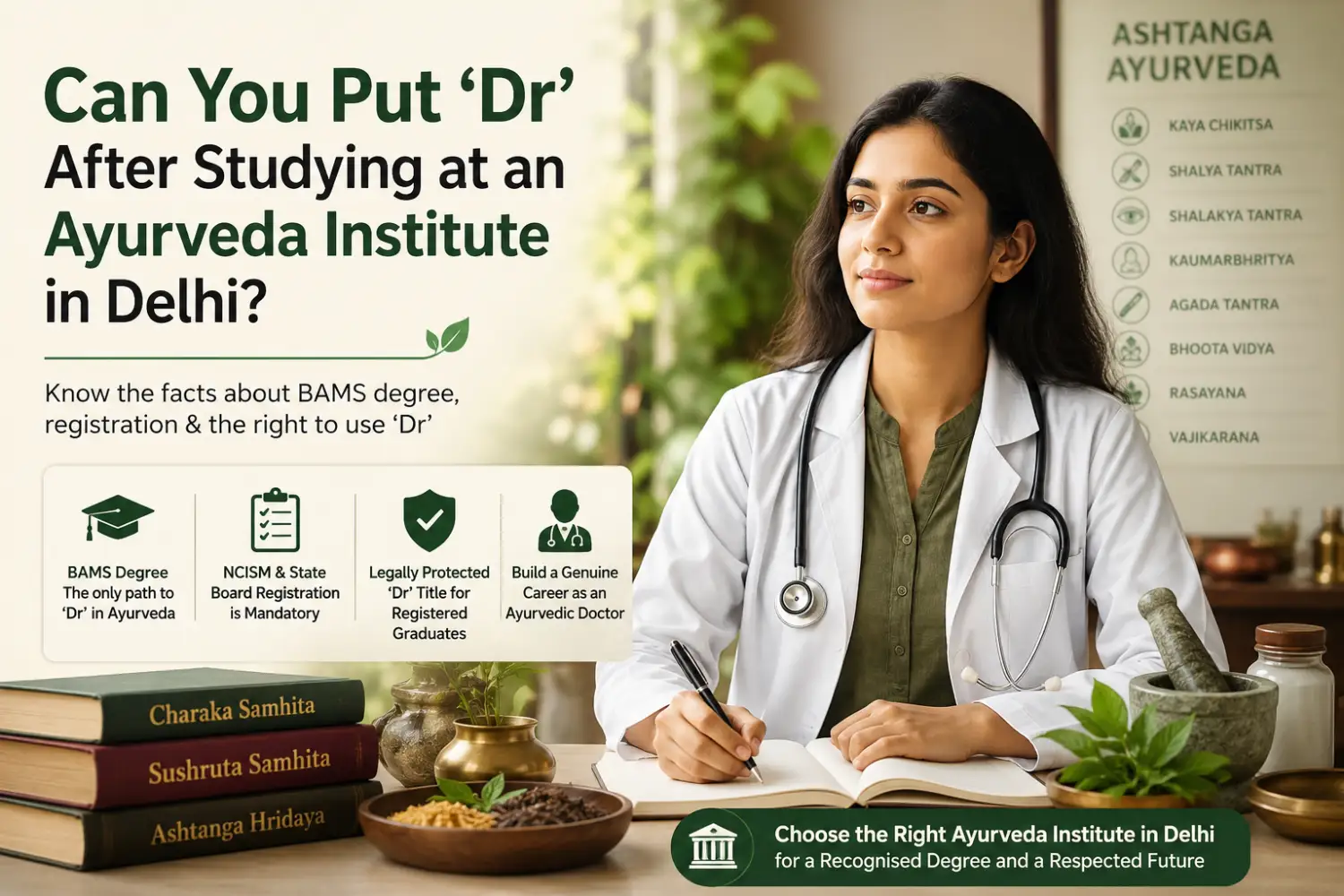
Can You Put ‘Dr’ After Studying at an Ayurveda Institute in Delhi?
Yes, but only if the course is a full BAMS degree. A graduate of an…
Why a BAMS Course Could Be the Most Rewarding Career Move in 2025
In an era of blazing speed change, today’s students are looking for careers that are…
Kaumarbhritya: Career Scope in Ayurvedic Paediatrics After BAMS at an Ayurvedic Medical College
What is Kaumarbhritya, and what career does it offer? Kaumarbhritya is the paediatrics branch of…
Ranking the Best Private BAMS Colleges: What Students Should Know
With the current era of holistic healing and alternative medicine, Ayurveda is taking center stage…
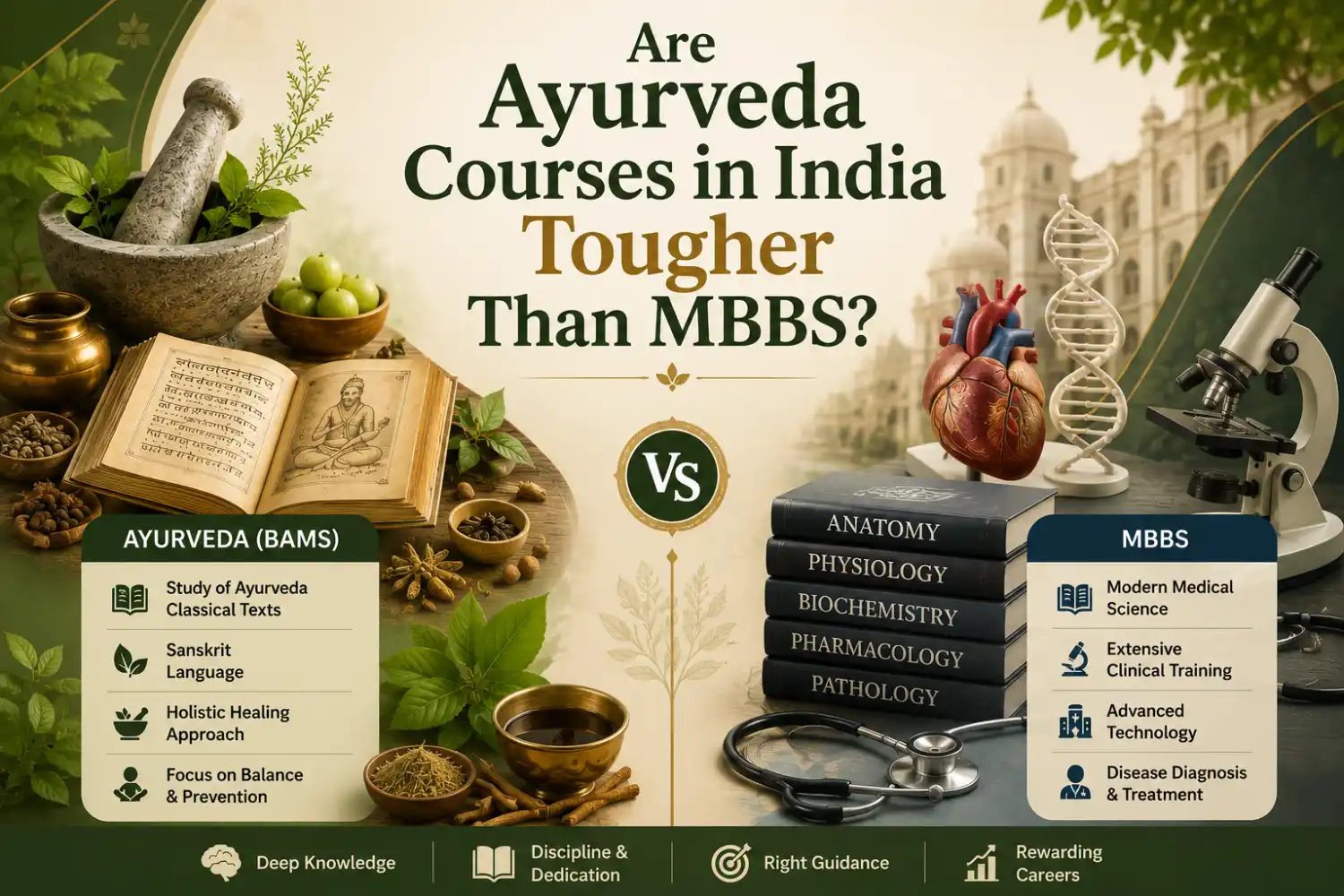
Are Ayurveda Courses in India Tougher Than MBBS?
Ayurveda courses in India are not easier than MBBS. They are difficult in a different…
Understanding Dosha Balance in Kayachikitsa: A Core Pillar of Ayurvedic Medicine Courses
INTRODUCTION Recent educational data indicate a 40% rise in global interest regarding integrative medicine, with…