
Which Ayurvedic medicine courses are driving genuine career growth today?
Home / BAMS / Which Ayurvedic medicine courses are driving genuine career growth today?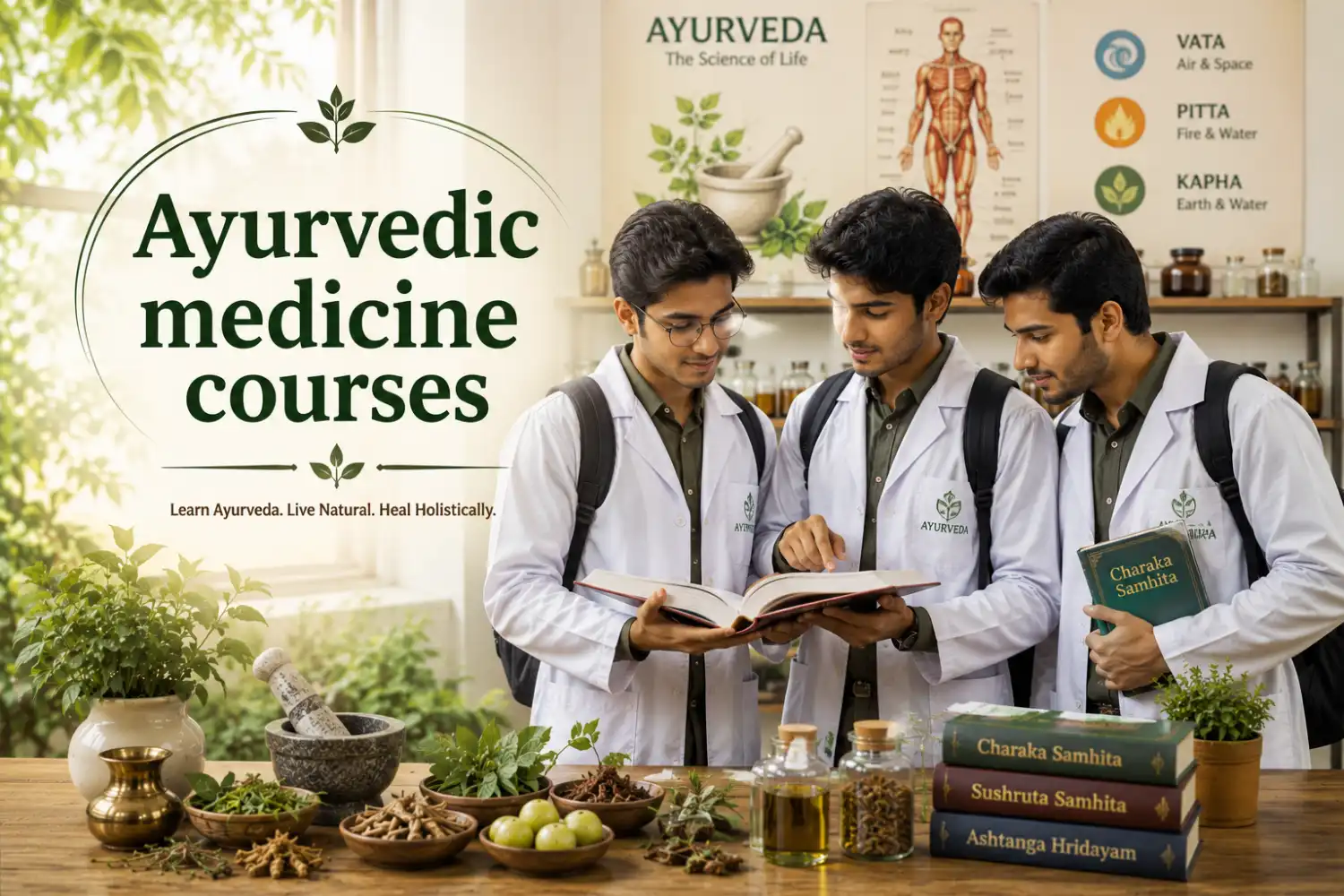
When a student considers Ayurvedic medicine courses, they are really choosing a future of healing, research, or wellness leadership. What types of programs actually open doors to income, reputation, or impact? The answer lies in courses that combine rigorous practice with solid credentials. Programs such as post-BAMS specializations in Panchakarma, Dravyaguna, Kayachikitsa or those integrating pharmacy, cosmetology or wellness therapy often lead directly to roles in herbal product development, specialized clinics, or government health schemes.
What does government data reveal about Ayurveda college expansion?
Let us examine the broader ecosystem first. According to the Union Ministry of Ayush, the number of Ayurveda colleges in India rose from 263 in 2014–15 to 541 by 2023–24. Undergraduate seats across AYUSH disciplines increased from 32,256 to 64,812, while postgraduate seats jumped from 1,891 to 7,799. These figures underscore both growing demand and growing opportunity for graduates of these Ayurvedic medicine courses. These numbers come directly from the central press bureau’s parliamentary update. (pib.gov.in)
Which institutes truly qualify as trustworthy Ayurveda colleges in India?
Many institutions claim excellence, but how many sustain clinical arms, faculty strength, research publications or placement outcomes? Look for colleges that appear on the national regulator’s current Grade A list. This rating reflects compliance with teaching, infrastructure and hospital requirements. If a college does not appear there, it is wise to cross-verify credentials. Viewing that list gives you clarity about which Ayurveda colleges in India are not just names but living institutions that support learning and career outcomes. (ncismindia.org)
What kind of numerical outcomes should you request directly?
When you contact admissions, ask for numbers such as:
- How many graduates from their diploma or certificate Ayurvedic medicine courses start clinical or wellness roles within six months
- What percentage of students secure placements or internships in hospitals, clinics or wellness resorts
- How many BAMS graduates complete these post-graduation or diploma courses within six months of graduation
A reliable institute might say that 75 percent of its diploma students take clinical roles in wellness resorts or clinics in less than six months. That figure gives insight into how effectively a course converts training into employment.
Which questions prove a program’s real infrastructure and readiness?
Ask institutions:
- Do they have functional herbal gardens, pharmacy labs or products manufacturing units
- Are they running OPD and IPD units in the teaching hospital regularly
- How many beds are operational and what monthly patient footfall they handle
An institution that reports seeing 2,000 outpatients and running an OPD five days per week demonstrates that its Ayurveda colleges in India system is alive and meaningful, not promotional.
Why do infrastructure and mentorship matter for career impact?
A program might offer designations like “certificate” or “specialization”, but without hands-on exposure or mentorship, it remains abstract. If alumni from their Ayurvedic medicine courses report launching clinics, joining wellness startups or entering government schemes, mentoring arrangements are implied. A college that facilitates alumni interaction or shadowing clinics provides an authentic academic-to-career bridge.
How can you compare options methodically and personally?
Begin with these steps:
- Shortlist three Ayurveda colleges in India known for credible Grade A status and strong clinical activity
- From each, choose one diploma or specialization Ayurvedic medicine course and request specific placement statistics and hospital activity data
- Plan phone calls or visits asking for enrollment numbers, practical hour requirements and early career outcomes
You might ask “What is your certification to clinical placement conversion percentage?” or “How many graduates begin earning within a year?” A thoughtful response tells you whether the program delivers on its promise.
What tangible benefit should a student expect within twelve months?
Doctors who complete high-impact Ayurvedic medicine courses combined with BAMS often begin earning within a year as therapists, clinic assistants or wellness consultants. If a course advertises an average starting income or internship-to-job rate of 70 percent within twelve months, and you can confirm that, your confidence builds.
What final step anchors your choice in fact and clarity?
Visit the central counselling portal to check college participation or verify seat counts. Refer to the regulator’s Grade A publication. Make structured queries of top institutions. With facts at hand and human interaction in the loop, you will align your effort with lasting progression.
In summary, the best path begins with identifying Ayurvedic medicine courses that combine modern clinic readiness, placement clarity and tangible numbers. Only then do the top Ayurveda colleges in India become more than names on a brochure—they become partners in your career growth.
Related Blogs
Sinusitis Cure in Ayurveda: Shalakya Tantra Guide
INTRODUCTION Current healthcare data suggests that chronic sinusitis impacts over 30 million individuals annually, creating…
Ancient Roots, Modern Careers: Exploring Opportunities at BAMS Colleges in Uttar Pradesh
When you hear about Ayurveda and career, what do you think of? Maybe century-old treatments,…
Is BAMS a Safe Career Choice In This Age of Modern Sciences?
INTRODUCTION Current healthcare trends indicate a seismic shift in patient preference. The Ayush sector in…
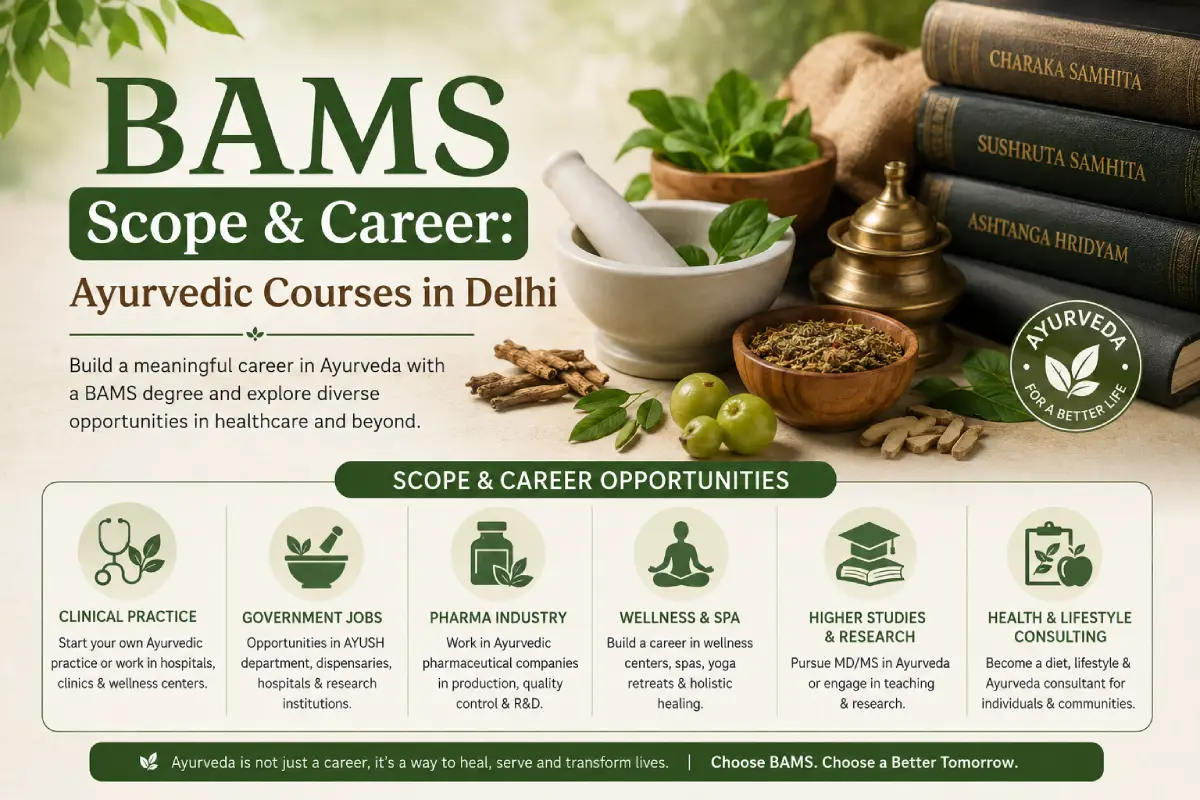
Scope and Career After a BAMS Degree in India: What the Top Ayurvedic Courses in Delhi Lead To
A BAMS degree, the Bachelor of Ayurvedic Medicine and Surgery, qualifies a graduate to practise…
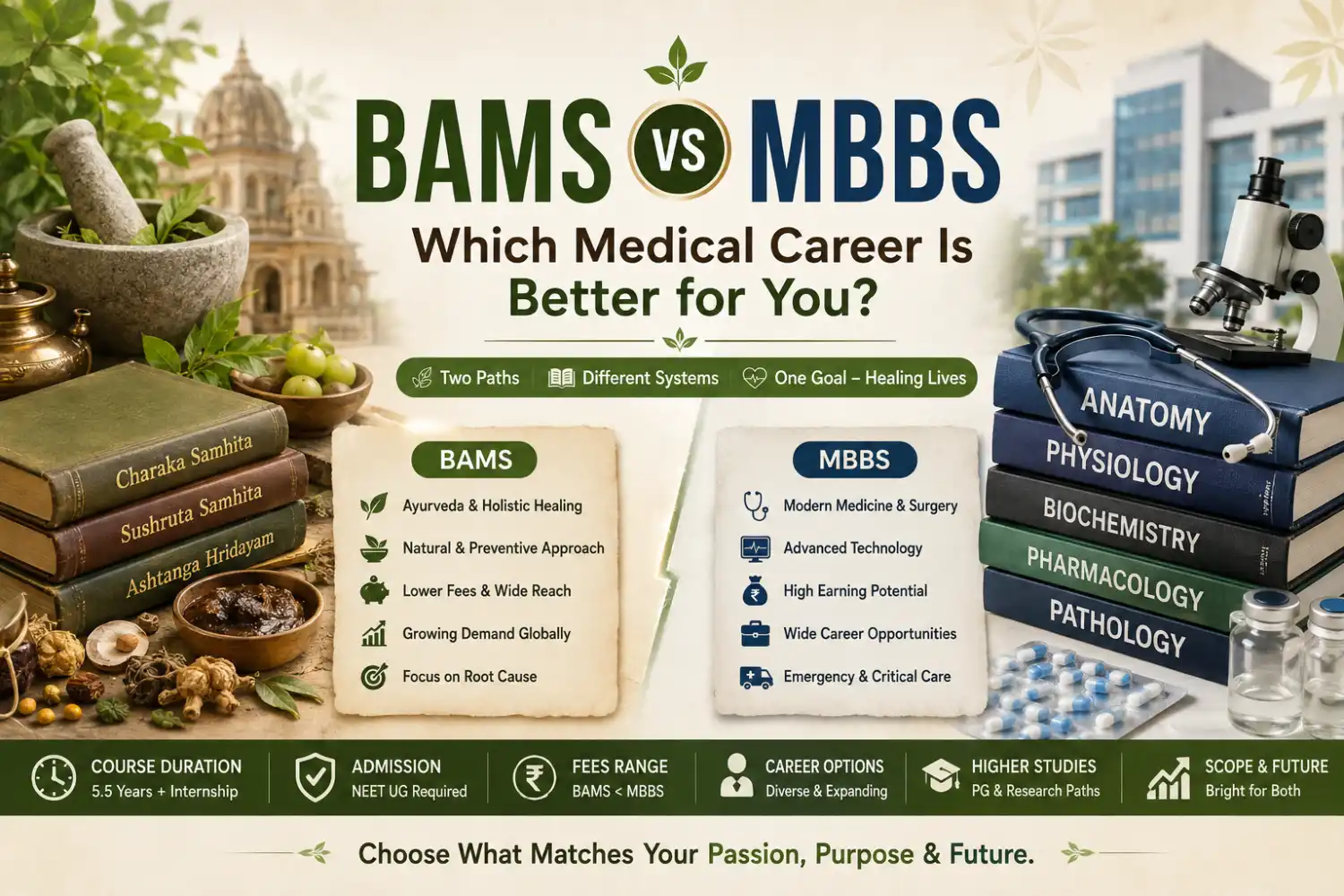
BAMS vs MBBS: Which Medical Career Is Better for You?
Neither degree is better in the abstract. MBBS trains a doctor in modern medicine and…
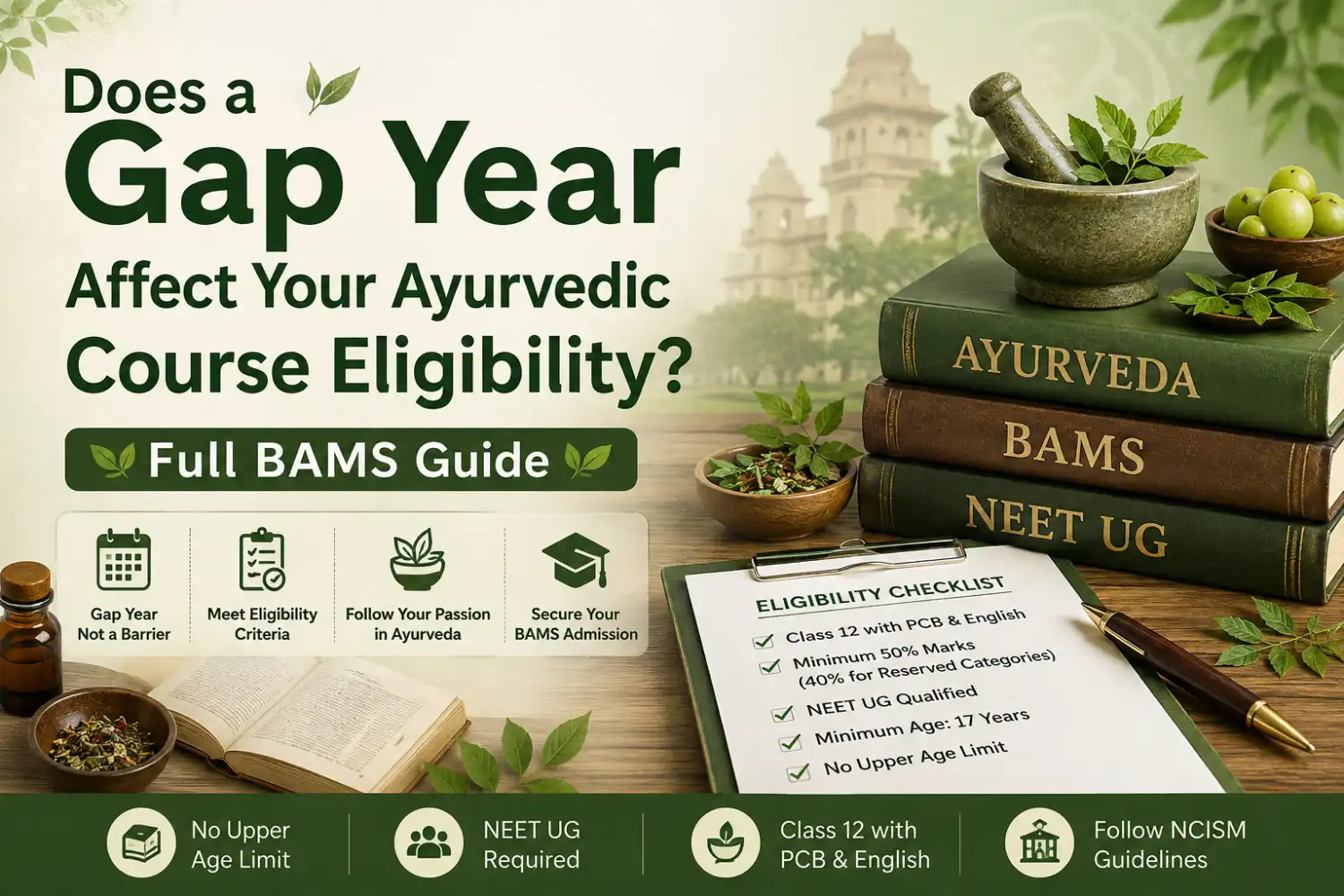
Does a Gap Year Affect Your Ayurvedic Course Eligibility? Full BAMS Guide
A gap year does not lower ayurvedic course eligibility for BAMS admission in India. NCISM…